
How to Hire Software Developers in the U.S. (Without Months of Waiting)
The roadmap is slipping. Your engineers are covering for a seat that has been empty for weeks. And the resumes in your inbox all say “full-stack, 5+ years,” yet none of them feel right.
If that sounds familiar, the problem is rarely a lack of applicants. It is the process. This guide shows how to hire software developers in the U.S. in eight practical steps, so you can fill the role faster and avoid a costly mismatch.
Why hiring software developers is so hard in the U.S.
Demand is strong and still growing. The U.S. Bureau of Labor Statistics reports a median annual wage of $133,080 for software developers as of May 2024, and projects 15% employment growth for software developers, QA analysts, and testers from 2024 to 2034, with about 129,200 openings each year. Good developers have options.
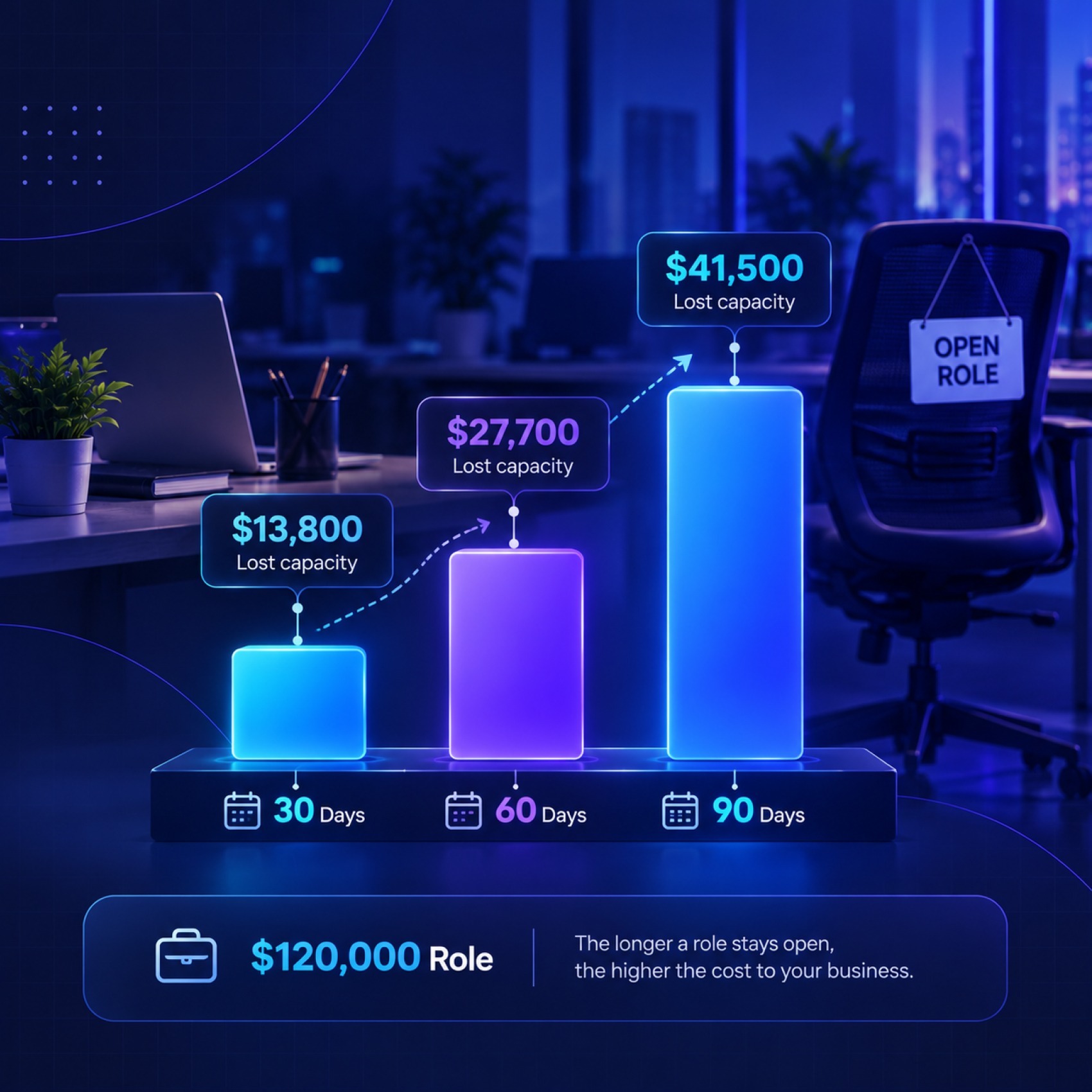
Time is the other pressure. SHRM’s 2026 benchmark puts the median time to fill a nonexecutive U.S. role at about 39 days, and every day a seat stays empty has a price. As we explain in our guide to the cost of an open role, a $120,000 position left vacant for 60 days represents roughly $27,700 in lost capacity.
The 8-step software developer hiring process
Step 1: Define the work, not just the job title
“Senior developer” means different things at different companies. Before you post anything, write a one-page scorecard: the outcomes this person must deliver in 30, 60, and 90 days, the core stack, and a short list of true must-haves versus nice-to-haves. A focused target attracts better candidates and keeps every interview consistent.
Step 2: Set a competitive, transparent pay range
Check market pay before you post. Many U.S. states and cities now require pay ranges in job postings, including some remote roles, and several restrict asking about salary history. Share a good-faith range early. It builds trust and prevents late-stage surprises.
Step 3: Choose the right hiring model
Match the model to the need:
- Permanent, high-impact roles: direct hire recruitment focuses on long-term fit.
- Project work or fast scaling: IT staff augmentation and contract staffing add specialists and flex up or down.
- Part-time or short-term capacity: Talent Solutions supplies developers for the hours you need, without a full-time hire.
- Several roles at once: recruitment process outsourcing adds embedded recruiting capacity.
Step 4: Source where developers actually are
The strongest developers are rarely scanning job boards. Combine referrals from your own engineers, direct outreach on professional networks, open-source and community contributors, and a talent partner’s network of passive candidates. A message that names the real problem, the stack, and the pay range earns far better replies than a generic pitch.

Step 5: Screen for evidence, not keywords
Anyone can list React or Python on a resume. Look for proof: shipped projects, code samples, and a short, practical work-sample test (about an hour) that mirrors the real job. For senior roles, add a design discussion about trade-offs. Give every candidate the same test and score it against your scorecard.
Step 6: Run structured interviews
Use two or three rounds with clear purposes: technical depth, collaboration, and role fit. Ask every candidate for the same role the same core questions, and rate the answers on the scorecard. Keep questions job-related and avoid anything about protected characteristics such as age, family status, religion, or national origin. Consistency improves quality and supports fair hiring.
Step 7: Move fast and communicate
Top developers often interview with several companies at once, so a slow process hands your competitors a head start. Tell candidates the full timeline from the first call, share feedback within two business days, and keep the gap between rounds short. Name one person to own candidate communication so nobody is left wondering where they stand. Try to fill the role in fewer than 39 days, the U.S. median time to fill a nonexecutive position.
Step 8: Close well and onboard with a plan
Make the offer quickly, put the pay range and start date in writing, and turn your scorecard into a 30-60-90-day plan. If you order background checks, remember that U.S. rules require a standalone disclosure and the candidate’s written authorization. A strong first few weeks protects the hire you worked hard to win.
Common mistakes that slow developer hiring
- A “unicorn” requirements list that no real person matches.
- Hiding the pay range, which loses strong candidates early.
- Screening on keywords instead of work samples.
- Letting feedback sit for a week between rounds.
- Using one hiring model for every need, when a contract developer or a flexible team would fit better.
When to bring in a recruitment partner
Consider outside help if a role has been open longer than 30 days, you are hiring several developers, or the stack is niche. A technical recruitment partner defines the role with you, searches proactively, and delivers pre-screened shortlists with clear reasoning for each candidate.
HireVista’s technical recruitment and software developer search services work this way, and you can see how HireVista recruits step by step. For a wider look at choosing the right model, read our guide on how recruitment services keep open roles from slowing growth.
Final thoughts: hire developers faster, without cutting corners
Hiring developers well is a process problem, and process problems are fixable. Define the work, price it fairly, screen for evidence, interview consistently, and move quickly. Do those things and the weeks you used to lose start coming back.
Ready to fill your developer role? Request talent from HireVista and tell us the role, timeline, and what is making the search difficult.
Frequently asked questions.
How long does it take to hire a software developer in the U.S.?
The median time to fill a nonexecutive role in the U.S. is about 39 days, according to SHRM’s 2026 benchmark. Specialized or senior developer roles often take longer, so a clear scorecard and a fast process matter.
How much does it cost to hire a software developer?
The Bureau of Labor Statistics reports a median annual wage of $133,080 for software developers (May 2024). Add recruiting fees, interview time, and the cost of a vacant seat, which you can estimate by dividing annual salary by 260 working days and multiplying by the days vacant.
Should I hire a full-time or contract developer?
Hire full-time for long-term, core product work. Choose contract staffing, IT staff augmentation, or a flexible team for project-based needs, short deadlines, or hours you cannot fill with a full-time hire.
What is the best way to screen software developers?
Use a short, practical work-sample test and review real code or shipped projects, then score every candidate against the same scorecard. This tests actual skill instead of resume keywords.